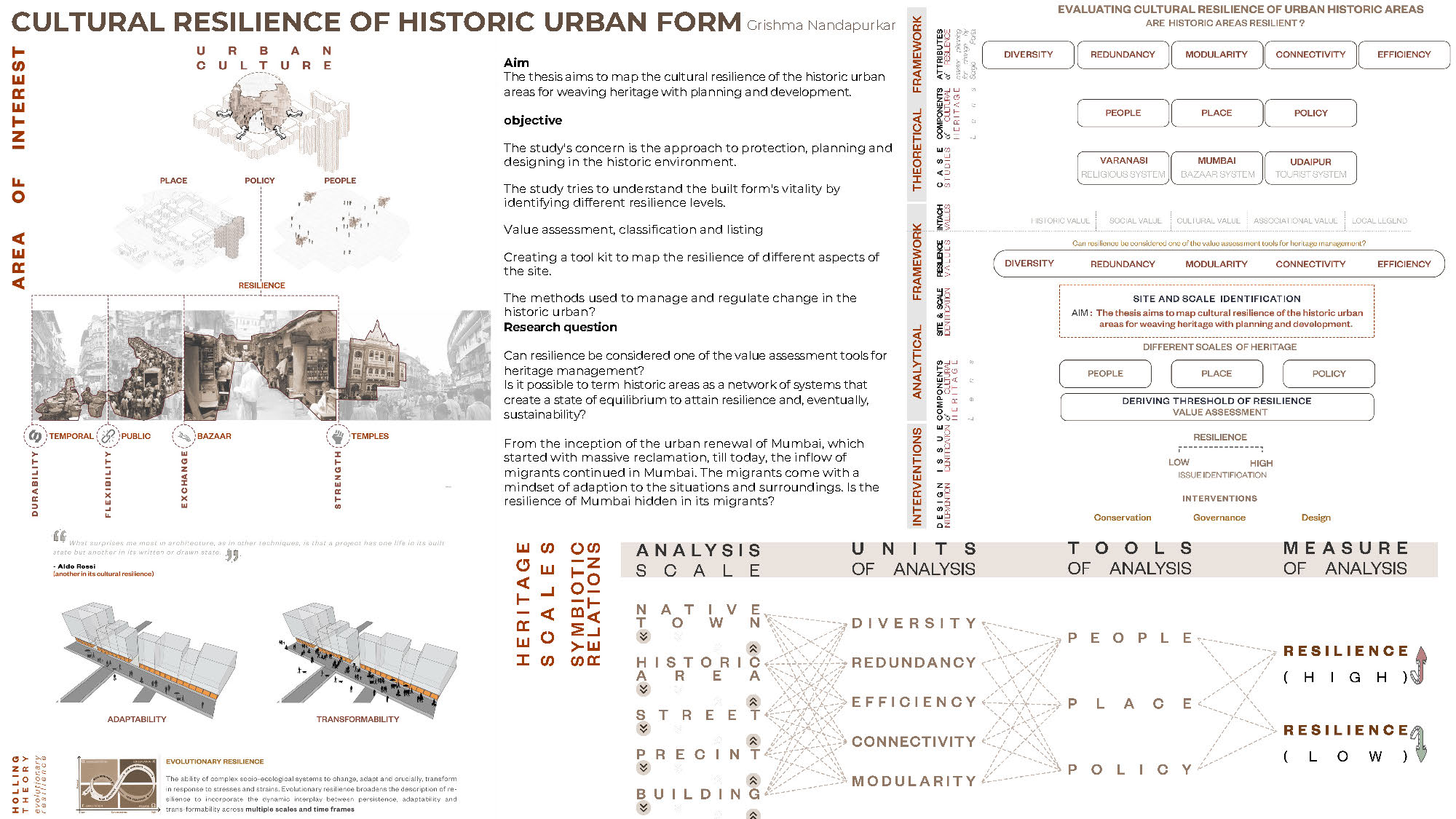
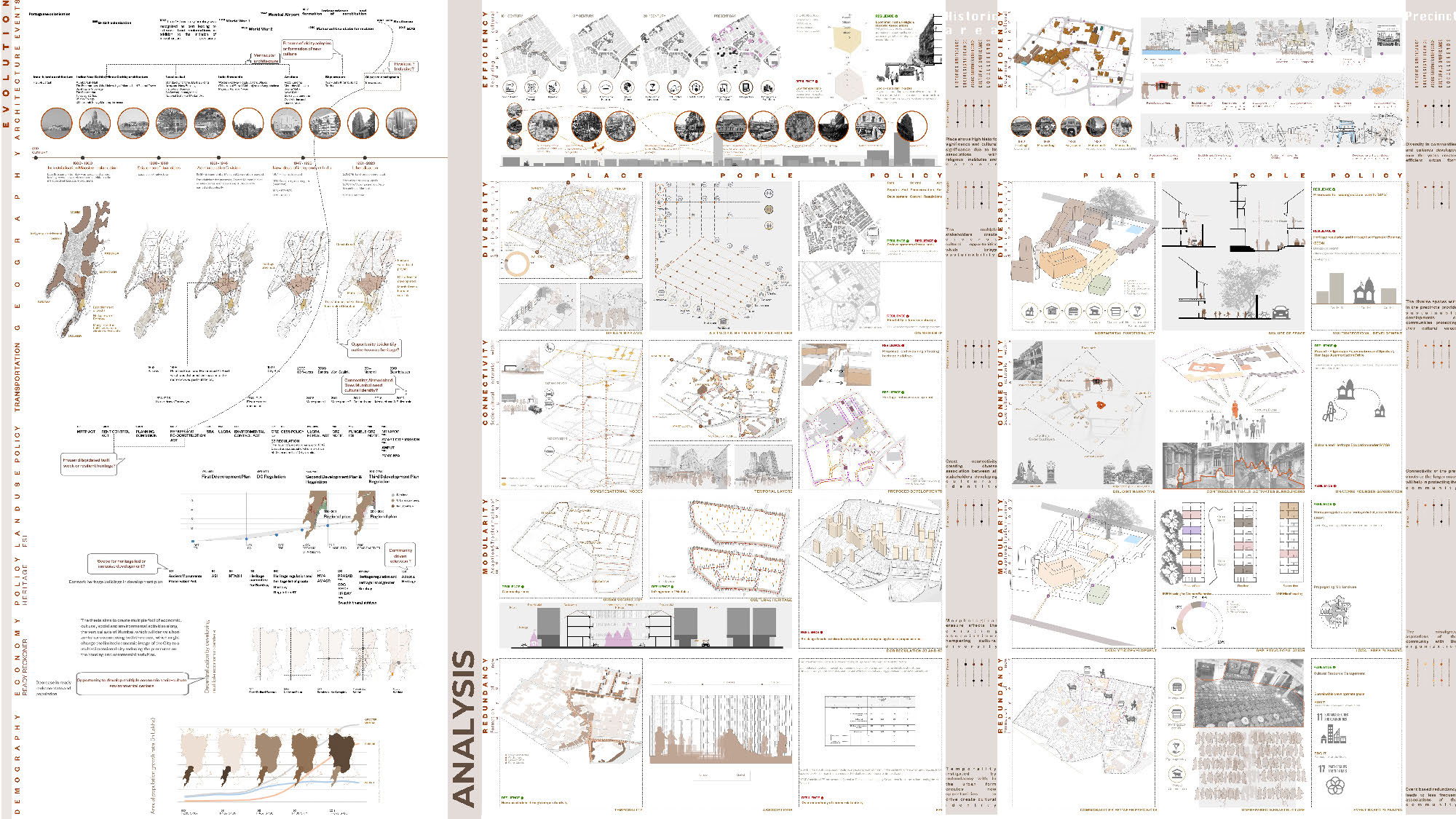
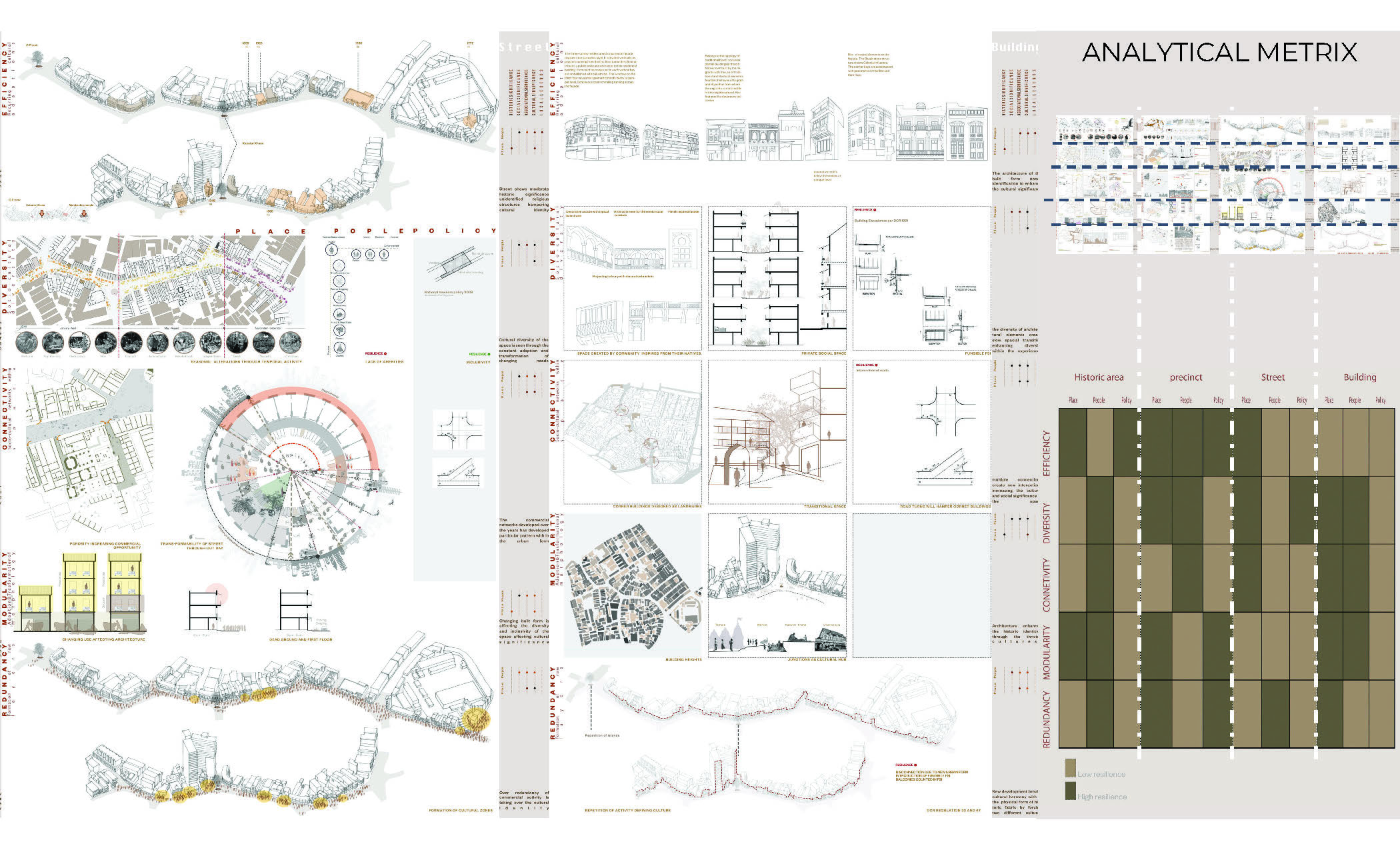
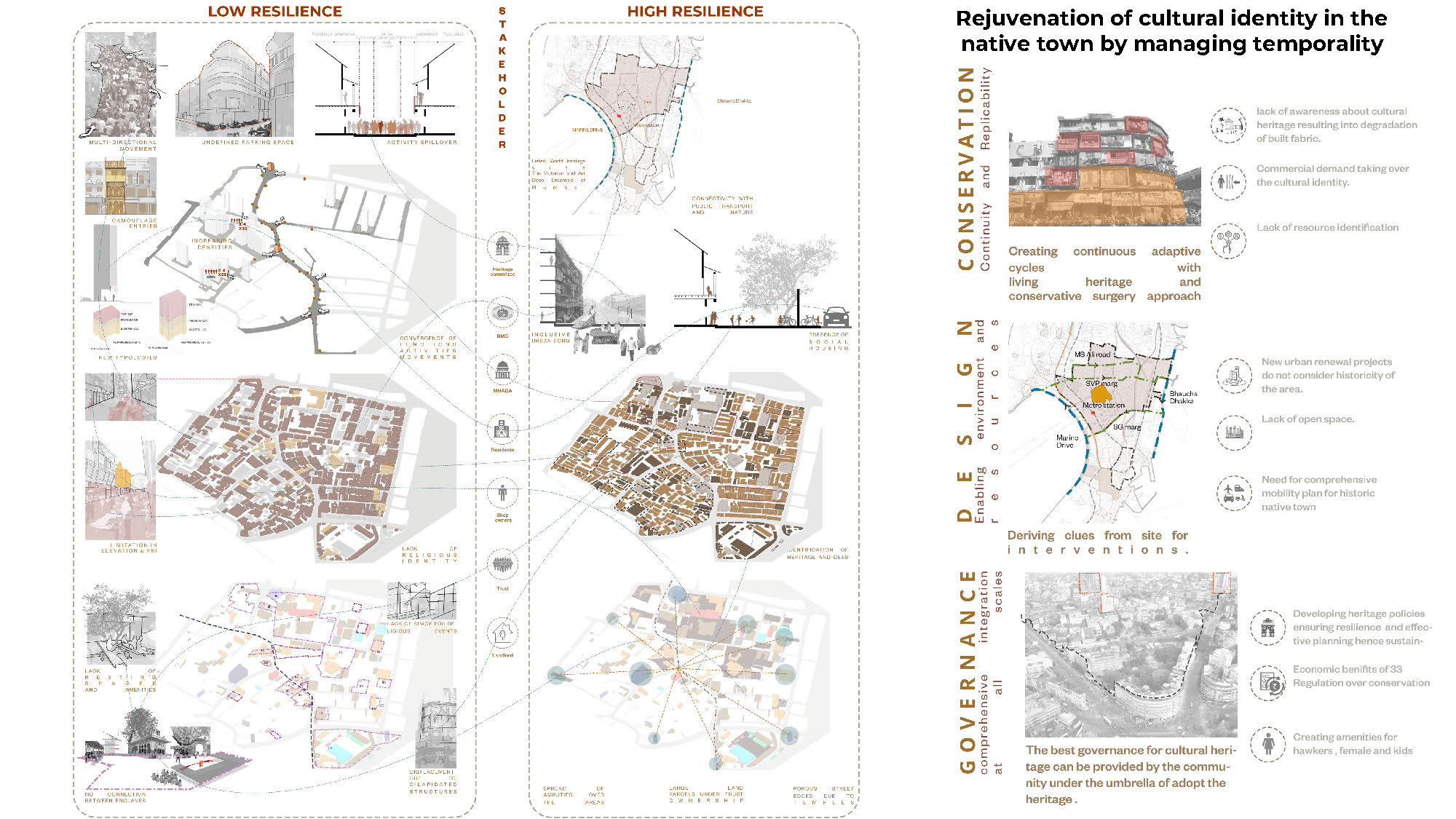
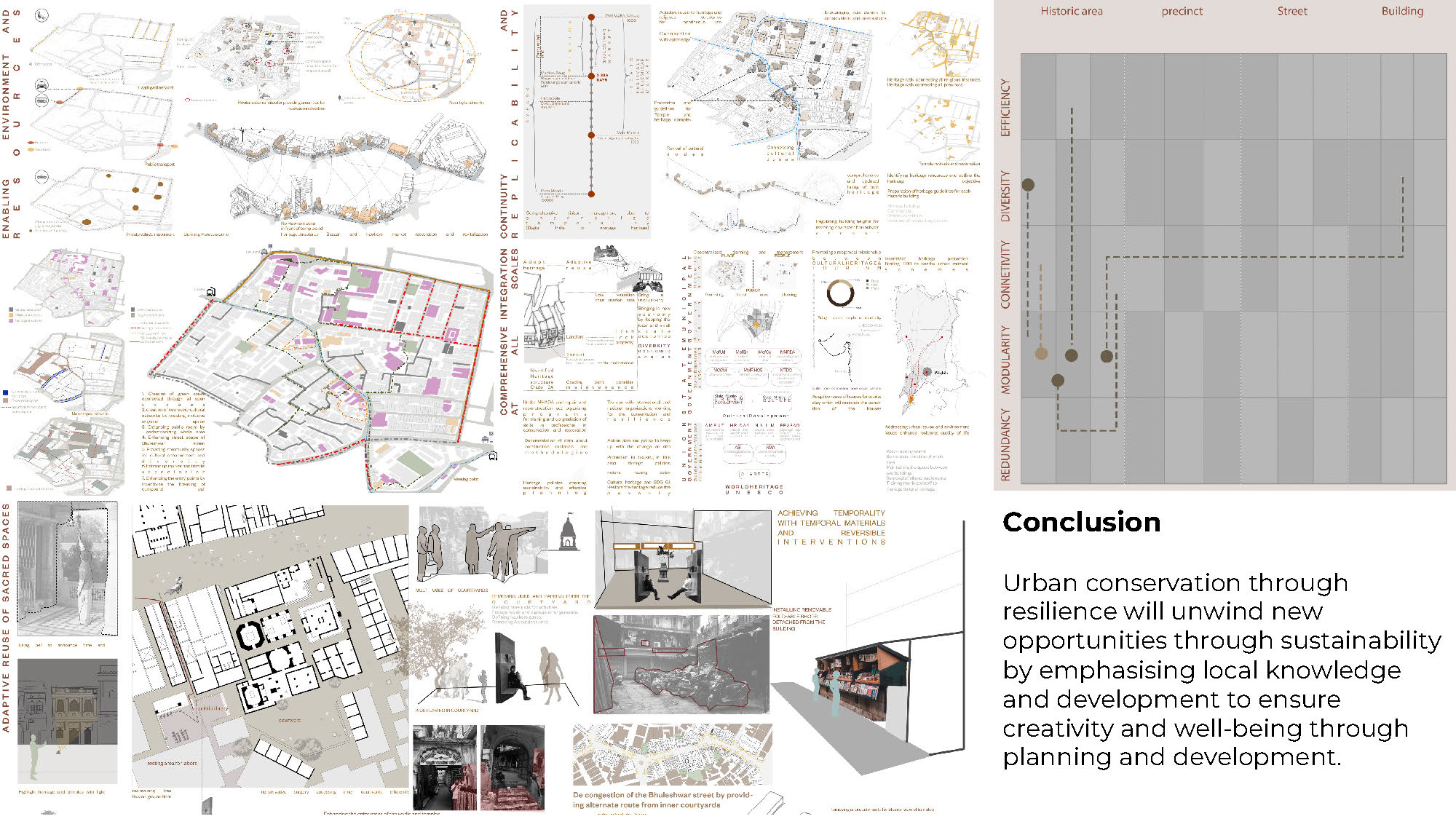
Historic Urban forms are dynamic systems shaped by the layers of social, cultural, and spatial evolution. In many cases, these forms remain unrecognised, not for lack of value, but because they derive their resilience from a symbiotic relationship with surrounding cultural practices and structures. This study contributes to the discourse on unacknowledged heritage by identifying such historic forms, whose persistence and relevance are enabled by cultural interdependencies that remain poorly acknowledged. Focusing on Mumbai’s Bhuleshwar area-a precinct known for its bustling market streets- the research reveals how these urban forms are intimately tied to a network of community-built temples. These temples, acting as cultural anchors, have enabled economic activity and civic life to flourish around them. The study argues for a participatory, people-centred approach to heritage, where cultural interconnections sustain livelihoods and generate resilience. Here, resilience is understood as a proactive and preventive strategy, anticipating pressures before they result in irreversible loss. The proposed Zonal Cultural Framework categorises areas into high and low resilience zones, utilising typological mapping, archival research, and community engagement to assess adaptive capacities. This interdisciplinary model supports conservation strategies integrating development with unrecognised yet resilient cultural forms.